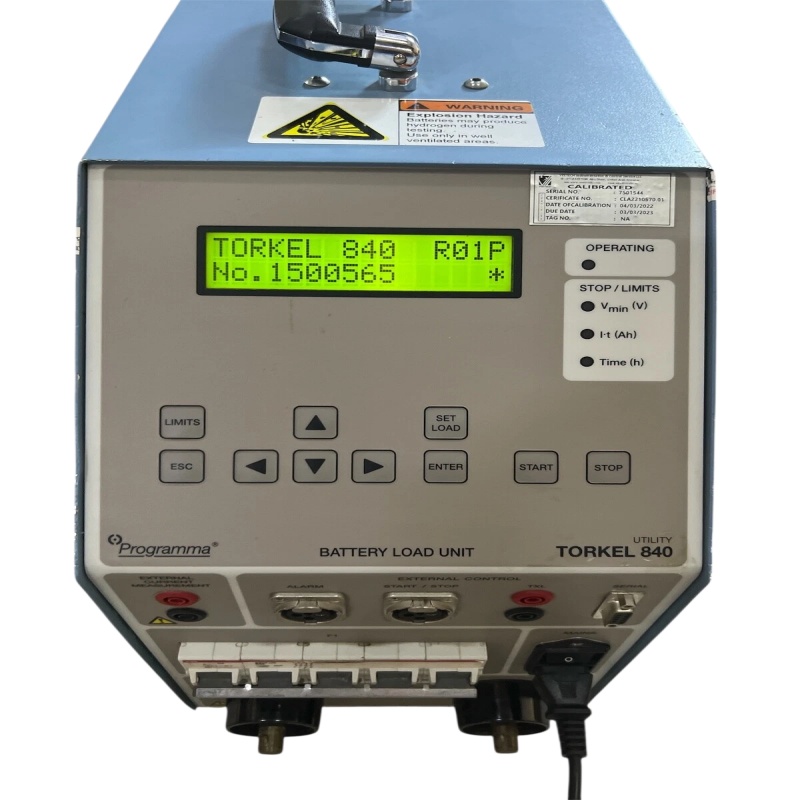
GE BS-49074 R104 Battery Load Unit – Complete Product Overview
GE BS-49074 R104 is a professional battery discharge load unit designed for use with the TORKEL 840 battery testing system from General Electric (Programma / Megger heritage). It is widely used by utilities and industrial facilities to verify the real capacity and reliability of critical backup battery systems.
This unit plays a key role in preventive maintenance programs where battery failure is not an option.
What is GE BS-49074 R104?
The BS-49074 R104 is an external load module (load bank) that works together with the TORKEL 840 battery discharge tester. It provides additional discharge capacity, allowing engineers to test medium and large battery banks safely and accurately.
Product Category
- Battery discharge testing equipment
- Utility battery load bank module
- Industrial maintenance & commissioning tool
Why Battery Discharge Testing Is Critical
Backup batteries power essential systems during outages, including:
- Electrical substations
- Power plants
- UPS and data centers
- Telecommunications networks
- Rail and transportation systems
- Industrial emergency systems
Even if batteries appear healthy, only a full discharge test proves real capacity. The BS-49074 R104 enables this test under controlled, measurable conditions.
Key Features and Benefits
1. Constant-Current Discharge Testing
The unit applies a stable and controlled load to the battery bank, simulating real-world power failure conditions. This ensures accurate capacity measurement.
2. Expandable Load Capacity
When paired with the TORKEL system, the BS-49074 R104 increases total discharge power, making it ideal for testing large stationary battery systems.
3. Accurate Capacity Verification
Helps engineers determine:
- Remaining battery capacity
- Aging or degraded cells
- Weak battery strings
- Need for replacement or maintenance
4. Safe and Reliable Testing
Designed for industrial environments where safety and repeatability are essential.
5. Compliance Support
Supports maintenance programs aligned with:
- IEEE battery testing recommendations
- IEC maintenance practices
- Utility and telecom maintenance standards
Typical Applications
The GE BS-49074 R104 is commonly used in:
Power Utilities
- Substation DC backup systems
- Protection and control power supplies
Data Centers & UPS Systems
- Verifying emergency backup performance
- Preventing costly downtime
Telecommunications
- Ensuring network uptime during power loss
Industrial & Energy Plants
- Emergency shutdown and control systems
How It Works in a Test System
A typical battery test setup includes:
| Component |
Function |
| TORKEL 840 Controller |
Controls discharge test and records data |
| BS-49074 R104 Load Unit |
Provides additional discharge load |
| Battery Bank |
System under test |
This modular design allows testing of small, medium, and large battery installations.
Advantages for Maintenance Teams
- Detect hidden battery failures early
- Prevent unexpected outages
- Extend battery service life
- Improve reliability of critical infrastructure
- Reduce operational risk
Technical Summary
- Model: BS-49074 R104
- Type: External battery discharge load module
- Compatible System: TORKEL 840 battery tester
- Industry: Power utility / telecom / UPS / industrial
- Function: Battery capacity and discharge testing
Conclusion
The GE BS-49074 R104 Battery Load Unit is an essential tool for professionals responsible for maintaining mission-critical backup power systems. By enabling precise and scalable battery discharge testing, it helps organizations ensure reliability, safety, and compliance across utility and industrial applications.
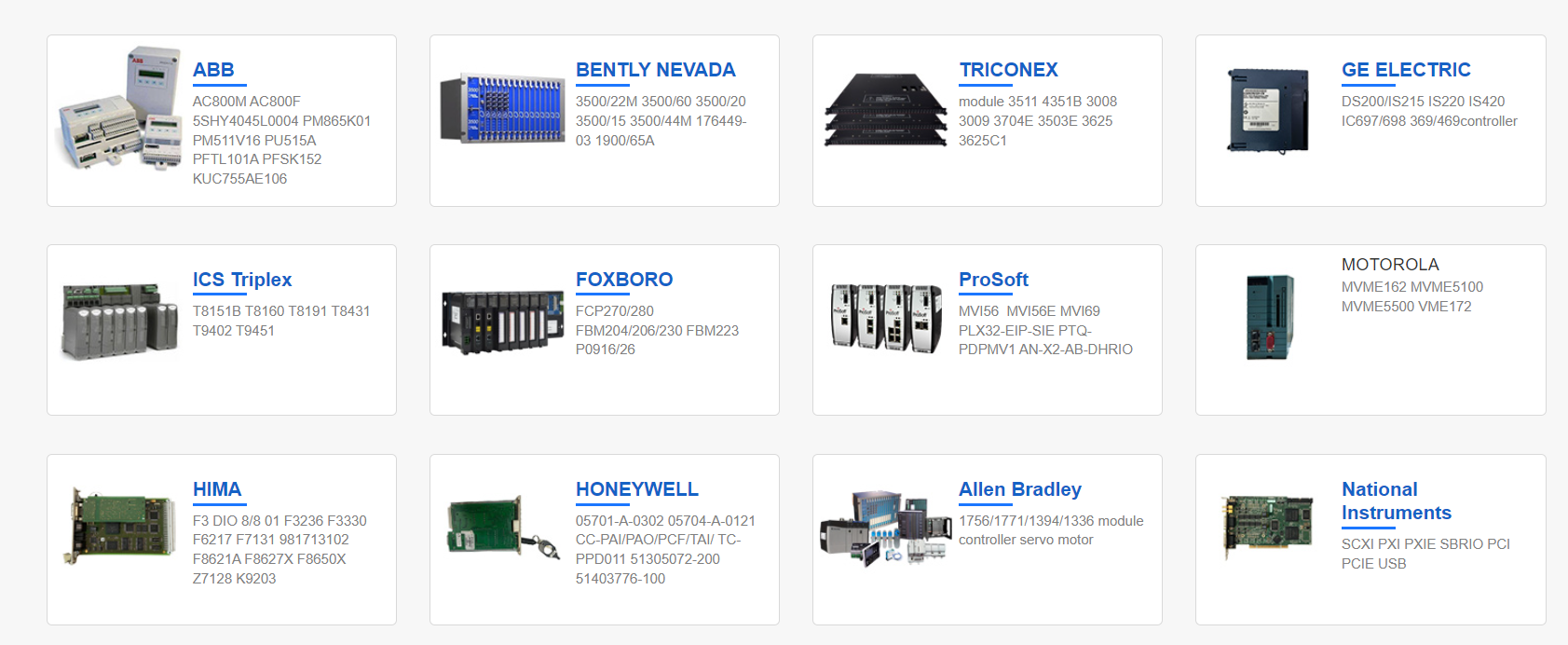
Main Brand:
First hand source, affordable price. Spot inventory!
•Shipping Port: Xiamen
•E-mail: sales5@xrjdcs.com
•Tel: +8618250705533(WhatsApp)
•Ship to you via Fedex/DHL/TNT/UPS/EMS
•Package: Original packing with cartons
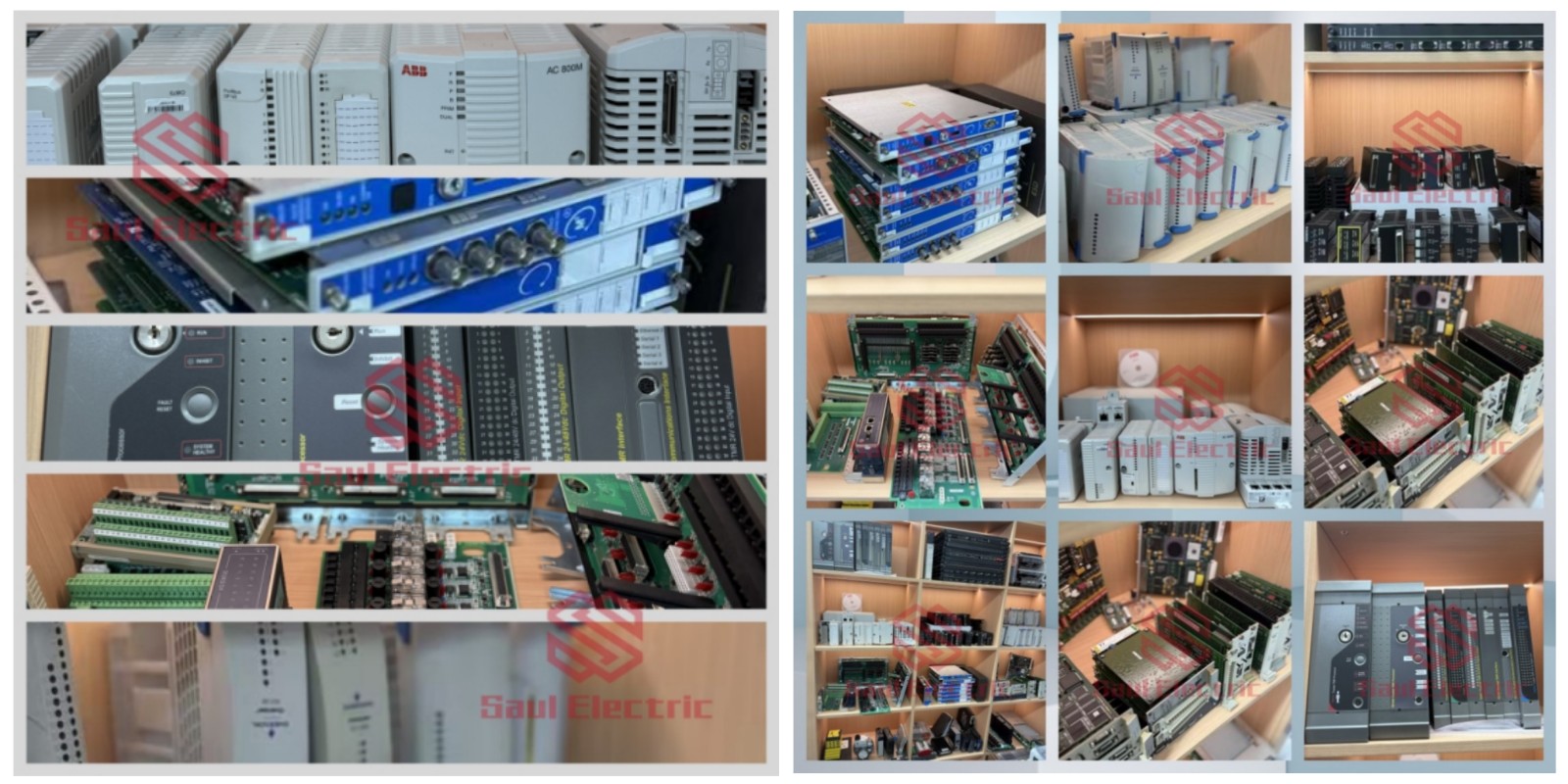
OUR FASTER DELIVERY RATE
Customer support responds quickly.
Partner network spans the globe.
Customers in 152 countries.
No matter where the user is in the world, SAUL ELECTRIC is committed to keeping your machine up and running as soon as possible.
What is a DCS?
A Distributed Control System (DCS) is a sophisticated, computer-based control system designed to automate, monitor, and manage complex industrial processes. It is widely used in large-scale industrial facilities such as refineries, power plants, chemical plants, and paper mills, where precision, reliability, and scalability are critical.
How Does a DCS Work?
A DCS is composed of several interconnected components that work seamlessly to ensure efficient process control. Here’s a breakdown of its key elements:
- Controllers:
These are the “brains” of the system. Controllers receive data from sensors, process it using pre-programmed logic, and send output signals to actuators to maintain optimal process conditions.
- Sensors:
Sensors act as the “eyes and ears” of the system, measuring critical physical parameters such as temperature, pressure, flow rate, and level. This real-time data is essential for accurate control.
- Actuators:
Actuators are the “muscles” of the system. They execute physical actions based on controller commands, such as opening/closing valves, starting/stopping motors, or adjusting dampers.
- Operator Stations:
These serve as the human-machine interface (HMI), allowing operators to monitor the process, adjust setpoints, and troubleshoot issues. Modern DCS systems often feature intuitive graphical interfaces for ease of use.
- Communication Network:
The backbone of the DCS, this network connects all components, enabling seamless data exchange and coordination. It ensures that every part of the system works in harmony, even across large industrial sites.
Why is a DCS Important?
- Centralized Control with Distributed Execution: A DCS allows for centralized monitoring while distributing control functions across multiple controllers, reducing the risk of system-wide failures.
- Scalability: It can easily expand to accommodate growing operational needs.
- Reliability: Redundant systems and fail-safes ensure continuous operation, even in critical environments.
- Efficiency: Optimizes processes, reduces waste, and improves overall productivity.


 English
 العربية









There are no reviews yet.