GE IS200TAMBH1ACB – Overview
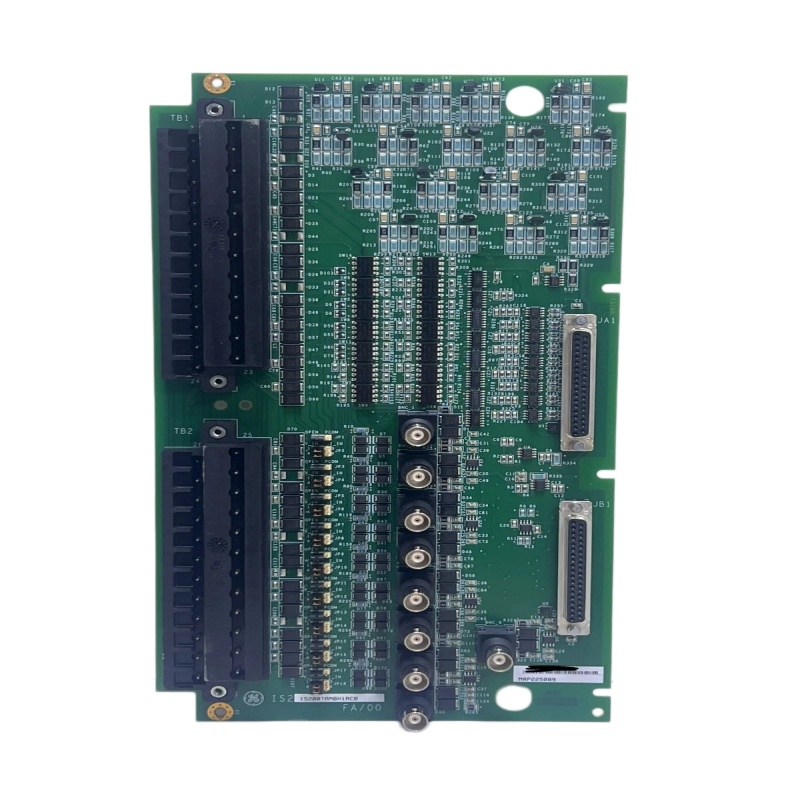
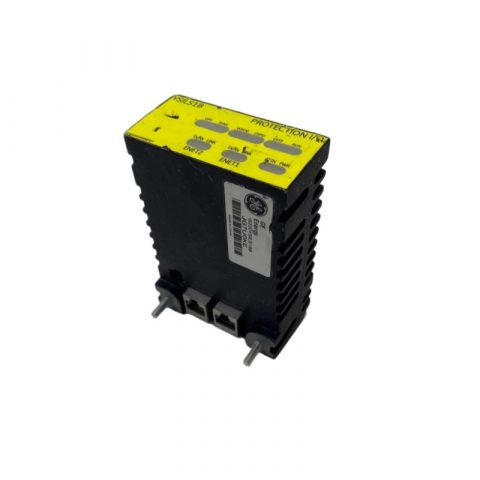
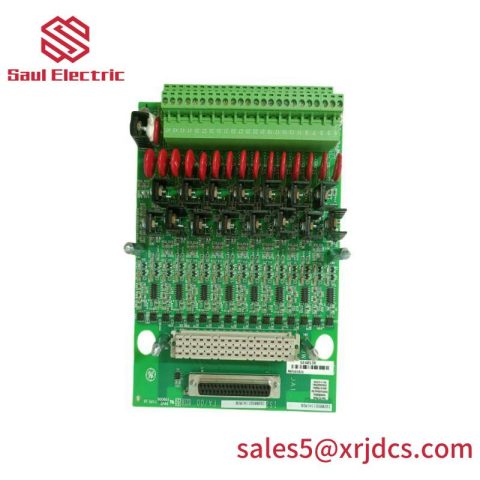
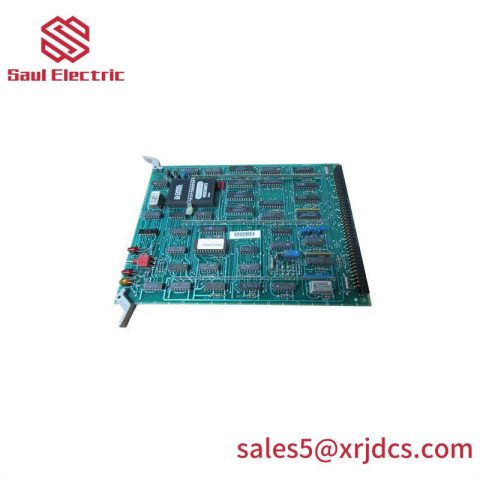
GE IS200TAMBH1ACB is an Acoustic Monitoring Terminal Board (TAMB) designed for the GE Mark VI Speedtronic turbine control system. It is used in gas and steam turbine monitoring to interface acoustic sensors with the control and diagnostic system.
Basic Information
- Manufacturer: General Electric (GE)
- Series: Mark VI Speedtronic
- Product type: Acoustic Monitoring Terminal Board
- Typical origin: USA
- Operating temperature: approx. −30°C to +65°C
This board is often called TAMB in GE documentation.
Main Function
The IS200TAMBH1ACB acts as the signal interface and power distribution board for turbine acoustic monitoring systems.
It connects acoustic sensors and transducers to the Mark VI control system and ensures accurate signal acquisition and diagnostics.
Typical applications:
- Gas turbine acoustic monitoring
- Steam turbine monitoring
- Combustion instability detection
- Early fault detection and predictive maintenance
Key Features
1) 9-Channel Acoustic Input Support
- Supports up to nine independent monitoring channels
- Each channel processes signals from individual acoustic sensors
This enables multi-point monitoring of turbine combustion and mechanical noise.
2) Dual 24 VDC Power Output per Channel
Each channel provides:
- Current-limited +24 VDC output
- Standard +24 VDC output (redundant)
Benefits:
- Sensor protection against overload
- Redundant power supply for reliability
3) Flexible Input Signal Selection
The board can accept:
- 4–20 mA current signals
- Voltage signals
Selectable via hardware jumpers.
This allows connection to various acoustic sensors and transducers.
4) Constant Current Source for Sensors
- Provides stable excitation for PCB acoustic sensors
- Ensures accurate and stable measurements
5) Open-Circuit Detection & Diagnostics
The system includes:
- High-impedance DC bias monitoring
- Detection of broken sensor wiring or open circuits
This improves system reliability and troubleshooting speed.
6) Signal Routing & Configuration
Hardware jumpers allow:
- Return line configuration
- Input type selection
- Isolation for noise reduction
This makes the board highly adaptable to different installations.
Role in the Mark VI System
In a Mark VI turbine control architecture:
Sensors → TAMB (IS200TAMBH1ACB) → VAMB board → Controller → HMI
The TAMB board serves as the terminal and conditioning layer between field acoustic sensors and the vibration/acoustic monitoring system.
Typical Technical Characteristics
Typical values (may vary by revision):
| Parameter |
Value |
| Channels |
9 |
| Input types |
Voltage / 4–20 mA |
| Power output |
Dual 24 VDC per channel |
| Operating temp |
−30°C to +65°C |
| Function |
Acoustic signal interface & diagnostics |
Summary
The IS200TAMBH1ACB is a critical interface board in GE Mark VI turbine systems that:
- Powers and connects acoustic sensors
- Conditions and routes acoustic signals
- Detects wiring faults and sensor issues
- Supports reliable turbine condition monitoring
.jpg "GE IS200TAMBH1ACB")
Main Brand:
First hand source, affordable price. Spot inventory!
•Shipping Port: Xiamen
•E-mail: sales5@xrjdcs.com
•Tel: +8618250705533(WhatsApp)
•Ship to you via Fedex/DHL/TNT/UPS/EMS
•Package: Original packing with cartons
OUR FASTER DELIVERY RATE
Customer support responds quickly.
Partner network spans the globe.
Customers in 152 countries.
No matter where the user is in the world, SAUL ELECTRIC is committed to keeping your machine up and running as soon as possible.
What is a DCS?
A Distributed Control System (DCS) is a sophisticated, computer-based control system designed to automate, monitor, and manage complex industrial processes. It is widely used in large-scale industrial facilities such as refineries, power plants, chemical plants, and paper mills, where precision, reliability, and scalability are critical.
How Does a DCS Work?
A DCS is composed of several interconnected components that work seamlessly to ensure efficient process control. Here’s a breakdown of its key elements:
- Controllers:
These are the “brains” of the system. Controllers receive data from sensors, process it using pre-programmed logic, and send output signals to actuators to maintain optimal process conditions.
- Sensors:
Sensors act as the “eyes and ears” of the system, measuring critical physical parameters such as temperature, pressure, flow rate, and level. This real-time data is essential for accurate control.
- Actuators:
Actuators are the “muscles” of the system. They execute physical actions based on controller commands, such as opening/closing valves, starting/stopping motors, or adjusting dampers.
- Operator Stations:
These serve as the human-machine interface (HMI), allowing operators to monitor the process, adjust setpoints, and troubleshoot issues. Modern DCS systems often feature intuitive graphical interfaces for ease of use.
- Communication Network:
The backbone of the DCS, this network connects all components, enabling seamless data exchange and coordination. It ensures that every part of the system works in harmony, even across large industrial sites.
Why is a DCS Important?
- Centralized Control with Distributed Execution: A DCS allows for centralized monitoring while distributing control functions across multiple controllers, reducing the risk of system-wide failures.
- Scalability: It can easily expand to accommodate growing operational needs.
- Reliability: Redundant systems and fail-safes ensure continuous operation, even in critical environments.
- Efficiency: Optimizes processes, reduces waste, and improves overall productivity.


 English
 العربية


.jpg "GE IS200TAMBH1ACB(2)")
.jpg "GE IS200TAMBH1ACB(3)")





There are no reviews yet.