

 English
 العربية



Technical Specifications
Product Name:
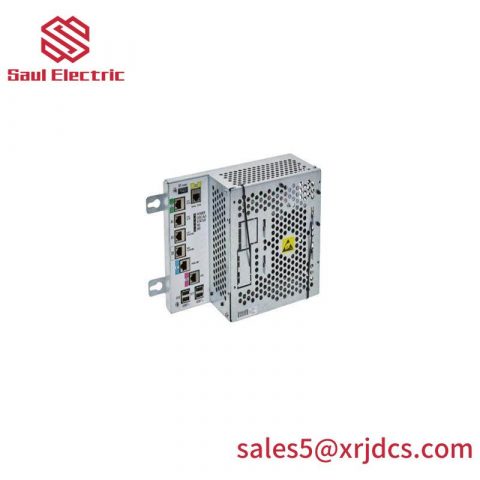
ABB S-053M (3BHB012897R0003)
Application:
Advanced PLC (Programmable Logic Controller) component.Widely used in modern industrial automation systems.
Power Requirements:
Input Voltage Range: 20.4V ~ 28.8V.
Output Voltage: Typically 24V DC.
Current and Power:
Maximum Output Current: 2A.
Maximum Output Power: 50W (calculated based on 24V DC and 2A).
Temperature Range:
Operating Temperature Range: -20°C ~ +60°C.
Storage Temperature Range: -20°C ~ +70°C.
Design Features:
Modular Design: Supports modularity for easy integration and system expansion.
Electrical Isolation: Ensures safety between I/O points.
Communication Protocols:
Supports industrial communication protocols such as:
Ethernet/IP
Modbus
TCP/IP
Dimensions and Installation:
Dimensions: Standard OEM dimensions (specific dimensions not provided).
Installation Method: Fixed installation.
Additional Features:
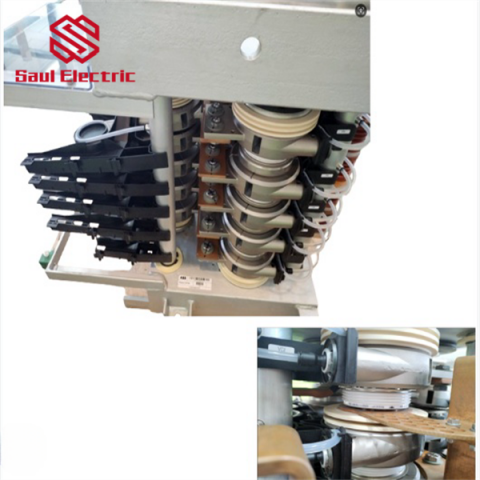
High reliability and versatility, suitable for complex automation systems.Part of the ABB phase IGCT module configuration rack.
Key Benefits:
High Performance: Designed for demanding industrial automation applications.
Scalability: Modular design allows for easy system expansion.
Robustness: Operates reliably in harsh industrial environments.
Typical Use Cases:
Industrial automation systems.
Power generation and distribution.
Process control in manufacturing.
Robotics and motion control.
Conclusion:
The ABB S-053M 3BHB012897R0003 is a high-performance PLC component designed for industrial automation. Its modular design, robust power handling, and support for multiple communication protocols make it a versatile and reliable choice for complex automation systems.

***************************************************
Annual hot selling advantage products:
ABB PM665、ABB S-073N、ABB S-123H 3BHB030479R0512
Only inventory left, in high demand source
First hand source, affordable price. Spot inventory!
•Shipping Port: Xiamen
•Ship to you via Fedex/DHL/TNT/UPS/EMS
•Package: Original packing with cartons
?️ABB Hot Selling Inventory:
3BHE023784  5SHY3545L0014          UFC911B106  3BHE037864R0106       5SHY6545L0001 AC10272001R0101      5SHY6545L0001  5SXE10-0181
UFC921A101  3BHE024855R0101        UFC789      3BHE014022P102        5SHY4045L0006 3BHB030310R0001      5SHY4045L0004 3BHB021400R0002
XVC770BE101 3BHE021083R0101        KUC755AE105 3BHB005243R0105       5SHY4045L0004 3BHB021400R0002      5SHY4045L0004  3BHE039203R0101
S-073N      3BHB009884R0021        ACS6000     3BHB011219R0001       5SHY4045L0003 3BHE019719R0101      5SHY4045L0003 3BHB021400
FAQ
Q: Do you provide a warranty for the goods?
A: Yes, we provide a warranty for all the goods from us.
Q: Could you provide technical support?
A: We’re in this field for more than 12 years. If there’s any problem, please contact us, and we’ll provide suggestions from our engineer to help you solve the problem.
Q: Do you keep goods in stock or only trade?
A: We have a large warehouse for goods. We keep lots of items in stock, so we can promise fast delivery.
Q: Are your goods new and original?
A: Yes, they are new and original.
What is a DCS?
A Distributed Control System (DCS) is a sophisticated, computer-based control system designed to automate, monitor, and manage complex industrial processes. It is widely used in large-scale industrial facilities such as refineries, power plants, chemical plants, and paper mills, where precision, reliability, and scalability are critical.
How Does a DCS Work?
A DCS is composed of several interconnected components that work seamlessly to ensure efficient process control. Here’s a breakdown of its key elements:
- Controllers:
These are the “brains” of the system. Controllers receive data from sensors, process it using pre-programmed logic, and send output signals to actuators to maintain optimal process conditions. - Sensors:
Sensors act as the “eyes and ears” of the system, measuring critical physical parameters such as temperature, pressure, flow rate, and level. This real-time data is essential for accurate control. - Actuators:
Actuators are the “muscles” of the system. They execute physical actions based on controller commands, such as opening/closing valves, starting/stopping motors, or adjusting dampers. - Operator Stations:
These serve as the human-machine interface (HMI), allowing operators to monitor the process, adjust setpoints, and troubleshoot issues. Modern DCS systems often feature intuitive graphical interfaces for ease of use. - Communication Network:
The backbone of the DCS, this network connects all components, enabling seamless data exchange and coordination. It ensures that every part of the system works in harmony, even across large industrial sites.
Why is a DCS Important?
- Centralized Control with Distributed Execution: A DCS allows for centralized monitoring while distributing control functions across multiple controllers, reducing the risk of system-wide failures.
- Scalability: It can easily expand to accommodate growing operational needs.
- Reliability: Redundant systems and fail-safes ensure continuous operation, even in critical environments.
- Efficiency: Optimizes processes, reduces waste, and improves overall productivity.


There are no reviews yet.