Call us 24/7+86 18250705533

The Cyber Resilience Act (CRA) Takes Effect

The EU has enacted the Cyber Resilience Act (CRA), setting cybersecurity standards for digital products. Companies have 36 months to comply, with some reporting duties due in 21 months.

Who Must Follow the CRA?

All manufacturers, importers, and distributors selling digital products in the EU must comply. This includes consumer goods like smart devices, industrial equipment such as controllers, and software like operating systems.

Key Requirements for Manufacturers

  • Secure Design: Build cybersecurity into products from the start, ensuring protection throughout their lifecycle.
  • Vulnerability Fixes: Provide free updates to fix vulnerabilities unless agreed otherwise with customers.
  • Documentation: Keep detailed records of vulnerabilities and components.
  • Fast Reporting: Report vulnerabilities within 24 hours via ENISA’s platform.

Steps for Manufacturers

Pilz, an automation safety expert, advises manufacturers to act early. Work with suppliers and operators to define secure network zones and update processes. Proactive planning ensures compliance and boosts resilience.

Pilz supports manufacturers in meeting safety and cybersecurity standards. Without strong security, even advanced safety systems are at risk. Prevention is critical.

By adopting the CRA, manufacturers can ensure compliance, build customer trust, and stay competitive in a connected market. The CRA strengthens the EU’s digital ecosystem, and early action is key to success.

P+F USi Ultrasonic Sensor—A Cut Above: USi®-Industry Ultrasonic Sensor System

P+F USi Ultrasonic Sensor—A Cut Above: USi®-Industry Ultrasonic Sensor System

Pepperl+Fuchs has expanded its extensive range of ultrasonic sensors with the powerful USi-industry ultrasonic sensor system. This innovative system stands out from standard ultrasonic sensors due to its compact design, independent ultrasonic transducers, and elliptical sound beam. Its unparalleled flexibility and robustness make it highly adaptable to diverse applications. With independent sensor channels, switchable parameter sets, and multiple operating modes, the system seamlessly adjusts to various scenarios. Its durable construction ensures reliable 3D area monitoring, whether indoors, outdoors, or under harsh conditions.

Reliable 3D Area Monitoring with the New USi-Industry Sensor System

Elliptical Sound Beam for Wide Coverage
The USi-industry ultrasonic sensor system features a unique sound beam shape, enabling comprehensive 3D monitoring. Unlike conventional ultrasonic sensors with cone-shaped beams and circular cross-sections, the USi system utilizes an elliptical beam cross-section. This characteristic provides significant advantages when detecting objects over large monitoring areas. For instance, it can reliably detect diverse object profiles such as pallets, boxes, or frames during goods inspection.

Independent and Wide Coverage for Enhanced Flexibility

The system’s actual sensing units—two ultrasonic transducers—measure just 27 x 21 x 13 mm. These transducers are separated from the evaluation unit and can be installed at different locations using cables up to 3 meters long. This compact design allows for exceptional flexibility in component placement. The small transducers can be mounted directly on robotic arms or Autonomous Mobile Robots (AMRs), ensuring precise speed and distance monitoring as well as robust collision avoidance.

Smart Software with Adjustable Parameters

The evaluation unit incorporates intelligent software algorithms to process acoustic signals. When multiple USi systems operate in the same environment, these algorithms automatically suppress potential echo interference, allowing the devices to function simultaneously without issues. The evaluation unit can connect to up to two ultrasonic transducers, each with its own channel, and these transducers can be individually configured via PACTware. Each transducer supports two parameter sets for distance, evaluation, output, and teaching. These sets can be toggled using a configurable digital input in the application, reducing investment costs since one evaluation unit supports two transducers.

Selective Evaluation Across Three Operating Modes

In teaching mode, the USi-industry sensor system learns its surroundings in detail. During this process, users can define a reference point to exclude specific fixed elements within the sensing range, such as a stationary machine part. Users can then decide how the sensor reacts—detecting an object’s presence, absence, or changes between these states. After completing the environment teaching process, selective evaluation can be configured to meet specific application requirements.

The sensor’s cycle time is equally versatile, adjustable between 10 and 200 milliseconds. Shorter cycle times suit the detection of fast-moving objects, while longer cycle times ensure stable measurements in high-impedance environments. The ultrasonic transducers comply with IP69 protection standards, offering moisture resistance and reliable operation even in exposed environments.

Typical Applications

The USi-industry sensors are widely used in Automated Guided Vehicles (AGVs) and Autonomous Mobile Robots (AMRs) in production areas, warehouses, and distribution centers. Additional applications include robotics and aviation, such as collision protection between aircraft and luggage transport vehicles.

Highlights of the USi-Industry Ultrasonic Sensor System

  • Modular Sensor System: Offers installation flexibility with miniature ultrasonic sensors that easily fit into tight spaces.
  • Elliptical 3D Detection Field: Provides optimal area monitoring with a unique sound beam shape.
  • Independent Channels: Each equipped with two switchable parameter sets for greater flexibility.
  • Customizable Operation: Three selectable operating modes and adjustable cycle times accommodate diverse application needs.
  • Simplified Integration: Easy environment teaching ensures seamless integration and interference resistance.
  • Enhanced Reliability: Echo suppression ensures smooth operation in challenging environments.

The USi-industry ultrasonic sensor system delivers unmatched precision, flexibility, and durability, making it an indispensable solution for modern industrial applications.

Advancing Control Systems for Modern Energy: Challenges and Solutions

Advancing Control Systems for Modern Energy: Challenges and Solutions

Reducing carbon dioxide emissions has become a global goal, driving the development and research of new technologies. To achieve this, it is essential to improve the efficiency of power chains and explore new methods for energy storage. This article explores the integration of renewable energy sources and the technologies required to ensure a stable and sustainable energy system.


Challenges in Renewable Energy Integration

To replace fossil fuels with renewable energy, sources such as solar, wind, hydro, biomass, and geothermal energy are increasingly being utilized. While biomass and geothermal energy provide steady power output, the energy generated from solar, wind, and wave sources is intermittent. Solar power generated during the day must be stored for nighttime use, and wind energy is similarly unreliable when there is no wind.

These new technologies require electronic control circuits, which in turn need power from various sources. Integrating such systems into the broader energy grid introduces numerous challenges, which need to be addressed with advanced solutions.


The Electric Vehicle Revolution and Power Supply Requirements

One of the rapidly growing markets is electric vehicles (EVs). For example, the European Union has mandated that starting in 2035, new cars equipped with traditional internal combustion engines (ICE) will no longer be sold. Other regions have introduced similar bans, and the transition to EVs requires numerous public and private charging stations, which will be powered by various global AC grids.

The global AC power supply voltage range is from 85Vac to 264Vac, and many modern power supplies can function across this entire range. However, chargers and wall boxes connected directly to fuse panels are more vulnerable to grid transients than devices connected via outlets. Therefore, these systems must comply with Overvoltage Category III (OVC III) standards, requiring 4kVac isolation to prevent damage from surges.


Ensuring Stability in Power Systems with Voltage Monitoring

These systems must also be able to tolerate faults in the power or neutral wiring. Incorrect phase connections during installation or a broken neutral line can lead to system imbalances and higher voltages. To ensure stability, input voltage monitoring is critical to protect expensive high-power blocks during faults.

P-Duke, for instance, offers small AC/DC converters that comply with OVC III standards and can operate in a wide voltage range of 85Vac to 530Vac. These converters ensure that auxiliary power supplies and monitoring circuits continue to function, even if a phase is incorrectly connected to the neutral line, offering protection for power stages in case of system failures.


Smart Grid Integration: Matching Power Availability

Modern energy systems need to be prepared for integration into smart grids or smart homes. These systems enable control to match the actual availability of power in the grid. When excess energy is available, electric car batteries can be charged, acting as energy buffers to stabilize the grid. Additionally, high-energy-consuming appliances will only operate when there is enough energy in the system.

This integration requires communication between the system and controllers. To facilitate this, systems use converters with input voltage ranges from 3.3V to 24V, enabling interaction with the grid or home controllers. These converters can be generated from auxiliary power supply voltage buses using small isolated or non-isolated units.


Energy Storage Solutions: Batteries and Alternatives

Given the non-constant nature of renewable energy, storage solutions are crucial. Hydroelectric power plants are commonly used for energy storage, where excess energy is used to pump water back into reservoirs. However, the capacity of such systems is limited. The most obvious method of energy storage today is through batteries.

Lead-acid batteries have been used for decades but are heavy, inefficient, and can only handle a limited number of charge cycles. Lithium batteries, on the other hand, are lighter, charge faster, and last for thousands of cycles, making them ideal for mobile devices and electric vehicles. However, the materials required for lithium batteries are scarce, and their extraction often comes with environmental and ethical concerns.

For example, a typical 50kWh electric vehicle battery contains approximately 4kg of lithium, 11kg of manganese, 12kg of cobalt, 12kg of nickel, and 33kg of graphite. The transition to electric mobility will require massive quantities of these materials, leading to challenges in their sourcing and recycling. As such, alternative energy storage solutions are being researched.


Exploring Alternative Battery Technologies

Alternative battery technologies are under investigation to address the limitations of lithium-ion batteries. Examples include aluminum-sulfur, sodium-ion, carbon-copper, and iron-oxygen batteries, which use abundant materials and are less reliant on problematic mining practices.

For non-mobile applications, the size and weight of the battery are less critical. Wind turbine towers, for example, can accommodate larger batteries for energy storage. When the grid has excess energy, this can be stored and later fed back into the grid during shortages. Typically, such systems only require temporary storage for 12 to 24 hours.

Each battery technology, however, has different voltage requirements, which makes it challenging to design systems that are compatible with different battery technologies. Power manufacturers like P-Duke offer converters with input voltage ranges from 2:1 to 12:1, enabling compatibility with a variety of battery technologies.


Supercapacitors: A New Frontier in Energy Storage

Supercapacitors present an interesting alternative to batteries. They offer long lifespans, with up to one million charge cycles, and can handle extremely high charging currents. Unlike batteries, supercapacitors do not suffer from damage due to deep discharges. They are ideal for applications requiring short bursts of power but with many charge cycles, such as in warehouse robots that can travel short distances and recharge in seconds.

Supercapacitors’ output voltage is highly dependent on their charge state, unlike batteries which provide a more stable voltage. This requires DC/DC converters with a wide input range to accommodate the varying voltage of supercapacitors.


Alternative Methods of Energy Storage: Hydrogen and Beyond

Other methods of storing energy include electrolysis to generate hydrogen from air, which can be converted into methane, the primary component of natural gas. These gases can be stored, transported, and used as fuel, for example, in fuel cells. Fuel cells are an emerging technology that is also being used in drones and other applications.

There are also mechanical energy storage systems such as compressed air and flywheels. While compressed air storage was once considered for wind turbines, its complexity and inefficiency led to its abandonment. Nonetheless, some projects are still working on storing excess energy from wind turbines in compressed air.

Flywheel storage systems, which can provide high power for short durations, are currently used to stabilize the grid.


The Complexity of the Energy Market

The energy market is complex, with numerous choices and emerging technologies. Each technology presents unique power supply requirements. To achieve energy savings and widespread adoption, modern systems must be able to communicate with each other and operate efficiently.

P-Duke and other power solution companies offer a variety of AC/DC converters designed to meet diverse energy market needs. These solutions are crucial for managing power across different voltage levels and ensuring stability in an increasingly interconnected and dynamic energy landscape.


Future-Proofing Energy Systems

As energy systems evolve, particularly with the rise of new technologies and alternative energy sources, power manufacturers like P-Duke are designing solutions to ensure these systems can adapt to the future. In the telecom and railway industries, for instance, converters are already being used to accommodate a wide range of battery voltages, ensuring that new systems entering the market are compatible with existing infrastructure.

By offering converters that support input voltage ranges from 16V to 160V, and output voltages from 5V to 53V, power manufacturers provide flexible solutions for energy market applications. These products enable designers to future-proof their systems and prepare for emerging markets with new opportunities and unforeseen challenges.

With plug-and-play solutions that are easy to deploy, these converters offer a simple way

Main products include various PLCs, DCL servo systems, robot spare parts, frequency converters, etc
We have the discontinued spare parts you urgently need here,
Advantage spot goods, if you cannot inquire or buy, please contact us.
Beautiful price! Product guarantee, excellent value service, sufficient inventory,
Welcome to inquire, we will offer you a discounted price!
Sales Manager:Jinny
Email: sales5@xrjdcs.com
WhatsApp/Moblie: +86 18250705533
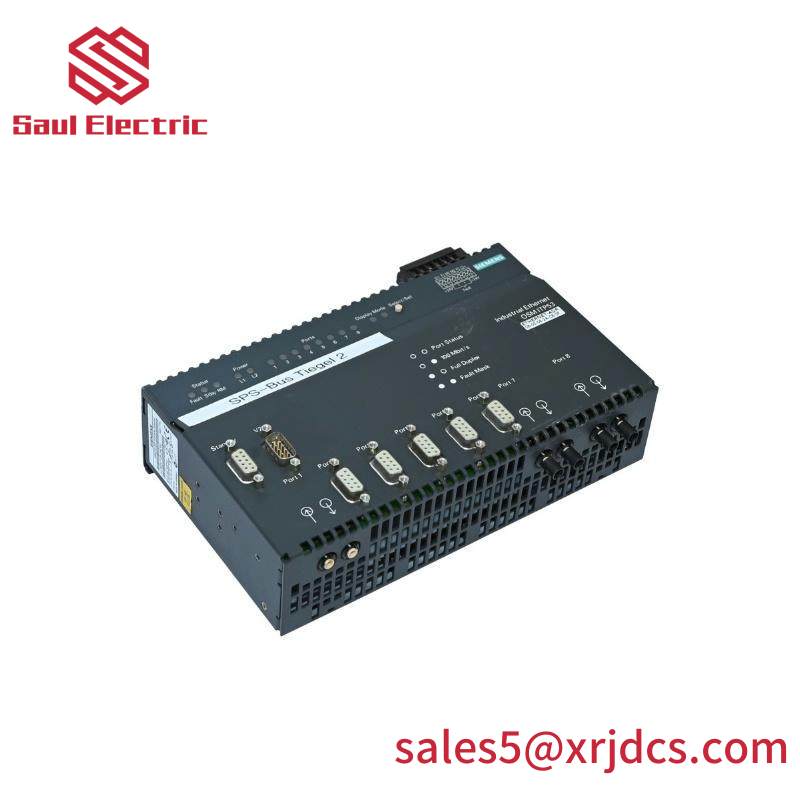
SIEMENS 6GK1 105-2AD00 Optical Switch Module - Precision Control for Industrial Automation

Stepper Motor Selection Guide

Selecting the right stepper motor requires precise calculations to ensure optimal performance. When making a selection, factors such as flange size, number of phases, motor length, shaft length, and the number of output wires must be carefully considered. Additionally, it’s essential to calculate torque and current requirements and verify compatibility with the matching driver.

1. Choosing the Torque for a Stepper Motor

The holding torque of a stepper motor is analogous to the “power” in traditional motors, though there are fundamental differences. The physical structure of stepper motors is distinct from that of AC or DC motors, as the output power of a stepper motor is variable. Selection is typically based on the required torque, i.e., the force needed to drive a load.

  • For torque requirements below 0.6 N·m, motors with frame sizes of 28 mm, 35 mm, or 42 mm are suitable.
  • For torque requirements above 0.6 N·m, 57 mm motors are generally more appropriate.
  • For higher torque needs, such as several N·m or more, motors with frame sizes of 86 mm, 110 mm, or 130 mm are recommended.

Common Stepper Motor Sizes:
20 mm | 28 mm | 35 mm | 42 mm | 57 mm | 60 mm | 86 mm | 110 mm | 130 mm

2. Selecting the Number of Phases

The number of phases is an often-overlooked factor when selecting stepper motors. However, it significantly impacts performance. Different phase configurations (commonly two-phase, three-phase, or five-phase) provide varying levels of precision and stability.

  • A higher number of phases results in smaller step angles and reduced vibration during operation.
  • Two-phase motors are widely used in most applications.
  • Three-phase motors are preferable for high-speed, high-torque applications.

3. Selecting the Motor Speed

The speed of a stepper motor requires careful consideration because the output torque is inversely proportional to the rotational speed.

  • At low speeds (several hundred RPM or less), stepper motors produce higher output torque.
  • At high speeds (1,000–9,000 RPM), the torque output decreases significantly.
  • For applications requiring high-speed operation, motors with lower coil resistance and inductance are recommended.
  • For low-speed, high-torque requirements, motors with higher inductance (e.g., 10–50 mH) and higher resistance are more suitable.

4. Selecting the No-Load Start Frequency

The no-load start frequency, commonly referred to as the “start frequency,” is a critical parameter for stepper motors.

  • Applications that require frequent instantaneous starts and stops, especially at speeds around 1,000 RPM or higher, often require an “accelerated start.”
  • For direct high-speed starts, reactive or permanent magnet stepper motors with higher start frequencies are ideal.

By carefully analyzing these factors, you can select a stepper motor that meets your specific application requirements while ensuring reliable and efficient operation.

Main products include various PLCs, DCL servo systems, robot spare parts, frequency converters, etc
We have the discontinued spare parts you urgently need here,
Advantage spot goods, if you cannot inquire or buy, please contact us.
Beautiful price! Product guarantee, excellent value service, sufficient inventory,
Welcome to inquire, we will offer you a discounted price!
Sales Manager:Jinny
Email: sales5@xrjdcs.com
WhatsApp/Moblie: +86 18250705533

Search for products

Back to Top
Product has been added to your cart
phone: +86 18250705533
to whats
+8618250705533
to whats
+8618250705533
email: sales5@xrjdcs.com